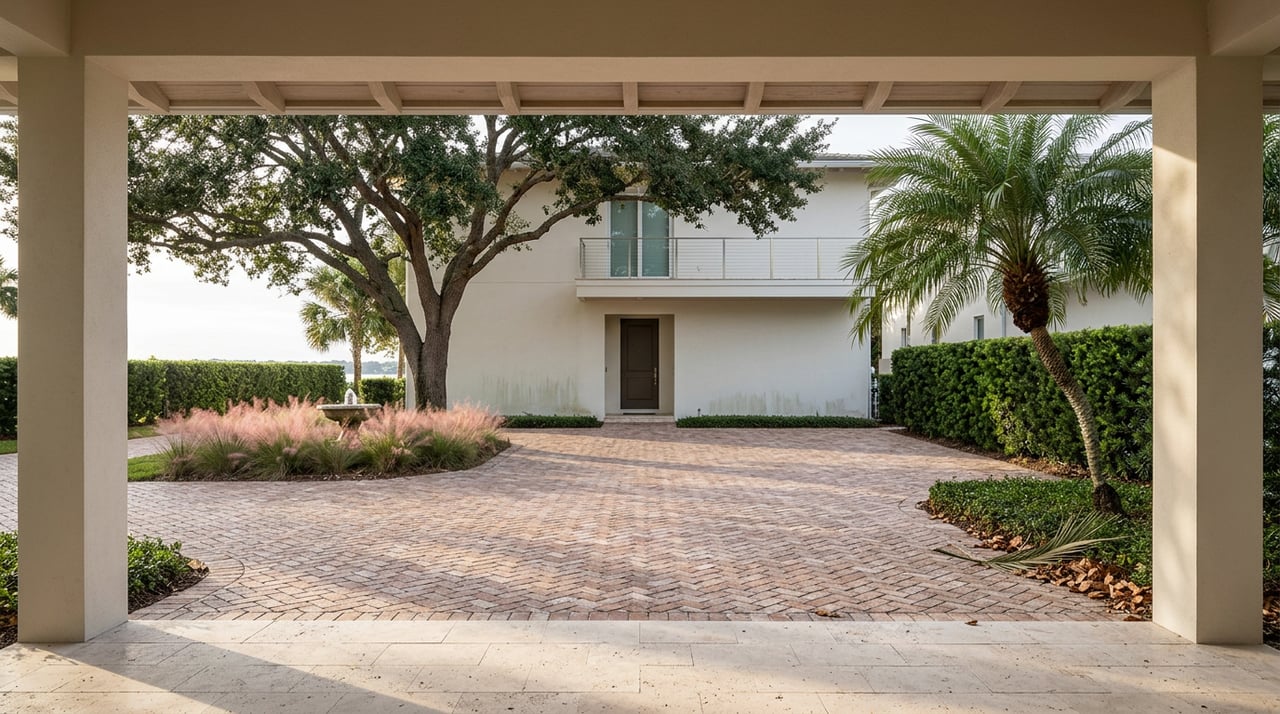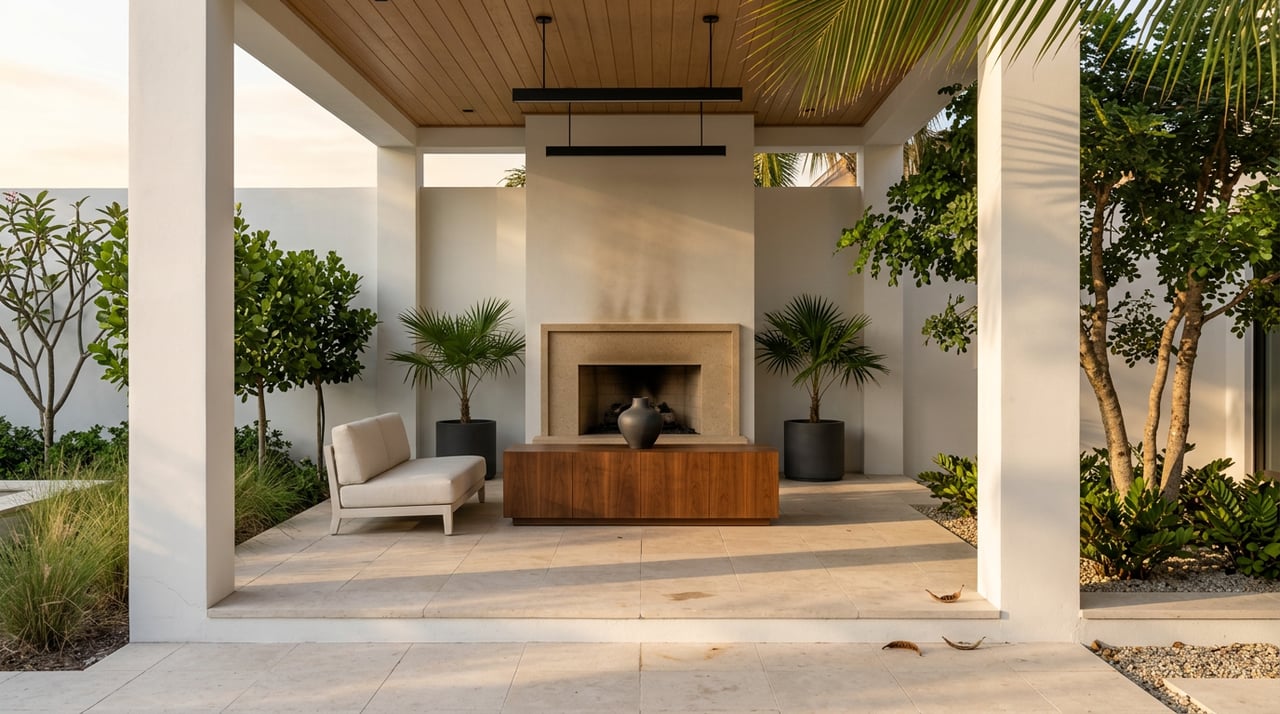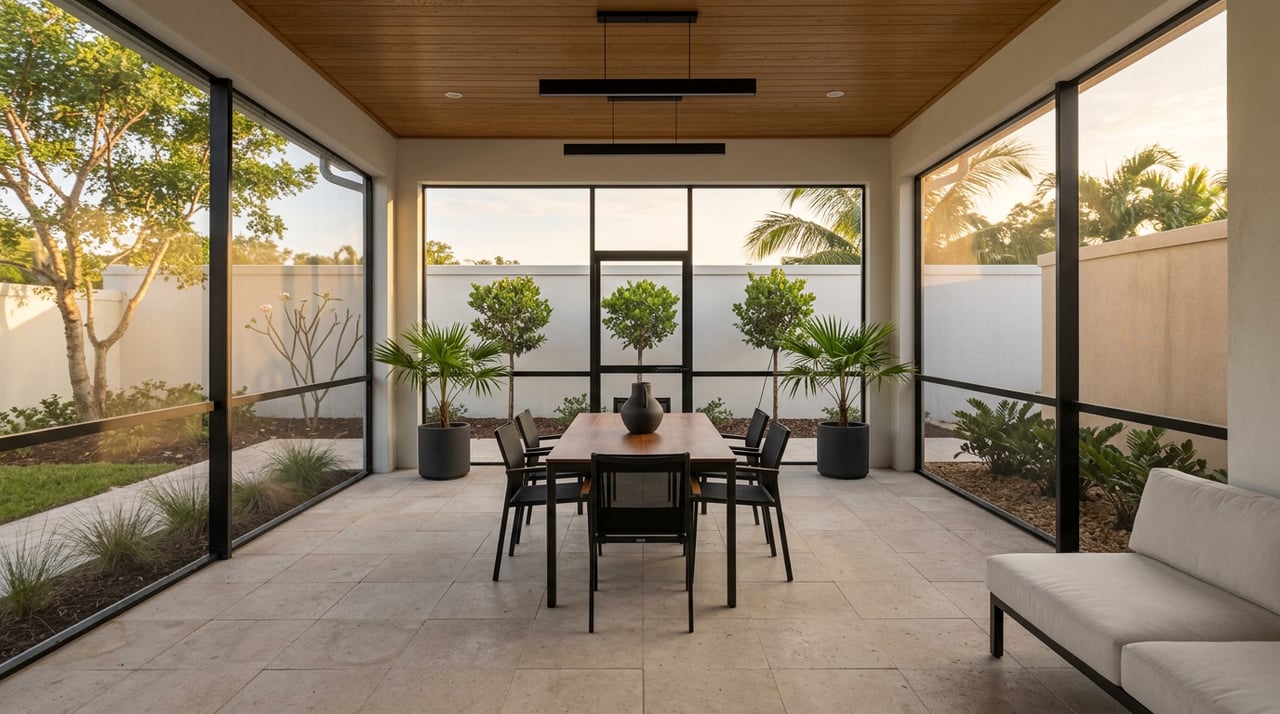
Two of Sarasota's best-known golf communities share almost everything on paper. Both have championship courses. Both have gated entries, tennis, and a clubhouse that looks like it belongs in a lifestyle magazine. And according to a long-running local comparison of sales histories, one of them has produced nearly twice as many expired or withdrawn listings as the other.
The difference has nothing to do with the golf. It comes down to a single line in the deed restrictions: whether joining the club is required to own the house, or whether it is simply an option.
That distinction between mandatory and optional membership is the part of Sarasota's country club market that rarely shows up in a listing description, and it matters more to how your home sells than almost any amenity on the property.
Same Fairways, Different Fine Print
Laurel Oak Estates, the residential community wrapped around Laurel Oak Country Club off Bee Ridge Road, does not require homeowners to join the club. You can buy a villa or an estate home there and never set foot on the golf course. The club itself has thrived under that arrangement for more than three decades. According to Laurel Oak's own membership materials, roughly half of the club's members live outside the neighborhood entirely, and the average member is just 60 years old, younger than many competing clubs in the area. Members who join also get year-round reciprocal privileges at Bird Key Yacht Club, a perk that has nothing to do with owning property in Laurel Oak at all.
Now compare that to The Oaks, the gated golf community south of Sarasota in Osprey. Membership in The Oaks Country Club is mandatory with any purchase across its three sections, Bayside, Clubside, and the Preserve. Buyers choose between an equity membership and a social membership, and initiation fees start near $40,000 before annual dues. There is no version of buying a house in The Oaks that does not come with a club obligation attached.
A local comparison of sales outcomes between the two communities found that Laurel Oak Estates, the optional-membership neighborhood, produced far fewer failed listings than The Oaks, where membership comes bundled with the deed. The homes are comparable in price and prestige. The buyer pool is not.
What "Mandatory" Actually Means at Closing
Not every mandatory-membership community works the same way, either, which is where buyers get surprised.
University Park, west of I-75 and one of the area's most established master-planned communities, also requires homeowners to join the country club. But University Park layers its financing differently. The club and its amenities are owned and financed by the University Park Recreation District, a special taxing district that bills non-ad valorem assessments directly on the county property tax bill to repay bonds used for acquisitions and upgrades. That is a separate charge from the HOA dues collected by the community association. A buyer comparing University Park to The Oaks on paper might see similar language, mandatory membership, golf course community, gated entry, and miss that one of them adds a recurring bond assessment to the tax bill while the other collects everything through club dues alone.
University Park's club is also semi-private, meaning it welcomes daily-fee public play alongside its resident members, something neither Laurel Oak nor The Oaks does. That openness does not change the mandatory membership requirement for homeowners, but it does mean the course generates revenue from outside players too, which is worth knowing if you are trying to understand how a club sustains itself over time.
Three communities, three different sets of obligations, all wearing the same "country club community" label in the listing.
Why the Buyer Pool Shrinks More Than the Course Improves
Here is the part that Sarasota buyers and sellers tend to underestimate. In a market where days on market are already stretching, adding a mandatory membership requirement does not just add a cost. It removes buyers from consideration entirely, and it does so at the exact moment sellers can least afford a smaller pool.
For the week of July 26 through August 1, 2026, closed sales across Sarasota County averaged 83 days on market, with single-family homes closing fastest at around 72 days and condos trailing at roughly 118 days. Properties priced at $1 million or more, the tier where most country club estate homes land, averaged 122 days on market across 37 closings that same week. That is the baseline friction every seller in Sarasota is working against right now, regardless of neighborhood.
Mandatory membership adds a second layer on top of that baseline. When membership is optional, as in Laurel Oak Estates, your buyer pool includes retirees who want the landscaping and the gated privacy without ever picking up a club, empty nesters downsizing from a bigger property, and remote buyers who plan to use the home seasonally and are not interested in a social calendar. When membership is mandatory, every one of those buyers either has to accept the club obligation or walk away, and the initiation fee alone, averaging around $72,000 across Sarasota's private clubs, is enough to end a lot of conversations before they start.
That is the mechanism behind the failed-listing gap between The Oaks and Laurel Oak Estates. It is not that one community is less desirable. It is that one of them requires every single buyer to clear a financial and lifestyle hurdle the other does not, and in a market already averaging three months to close, a narrower pool shows up as longer time on market and more listings that expire before they find a buyer.
What to Ask Before You Write an Offer
If you are comparing golf communities in Sarasota, the course rating and the clubhouse photos are the easy part. The questions worth asking before you get attached to a specific address are these:
- Is club membership mandatory for this exact parcel, or just for a different section of the same community? Some neighborhoods, like The Oaks, require it everywhere. Others attach the requirement only to certain gated enclaves within a larger development.
- What is the current initiation fee and annual dues, and is either transferable to the next buyer or does it reset at full price with each sale?
- Does the community finance its amenities through a special district, the way University Park does through UPRD? If so, ask for the current non-ad valorem assessment on that specific parcel's tax bill, since it will not show up in the HOA documents alone.
- Ask the listing agent how long comparable club-mandatory homes in that same community have taken to sell recently, not the countywide average. The county figure tells you about the broader market. It will not tell you whether this particular neighborhood's membership structure is adding months to the timeline.
None of this means mandatory-membership communities are a poor choice. Buyers who golf regularly and want the social calendar that comes with it often prefer knowing every neighbor belongs to the same club. But if resale flexibility matters to you, or if you are the kind of buyer who wants the lifestyle without the obligation, the difference between a Laurel Oak Estates listing and an Oaks listing is not cosmetic. It is structural, and it will still be structural the day you decide to sell.
Common Questions
Is membership always required to buy in a Sarasota golf community? No. It depends on the specific community and sometimes the specific section within it. Laurel Oak Estates does not require membership to purchase. The Oaks requires it across all three of its gated sections. University Park requires it for homeowners but structures part of the cost through a special taxing district rather than club dues alone.
Does mandatory membership always hurt resale value? Not necessarily on price, but it narrows who can buy. In a county where closed sales are averaging 83 to 92 days and luxury properties are running well past 120 days, a smaller buyer pool tends to show up as a longer marketing period or a higher chance of a listing expiring before it sells.
Can a special district assessment really show up on my property tax bill? Yes. That is exactly how University Park's Recreation District works. Bond-related costs for the club and recreation assets are billed as non-ad valorem assessments on the county tax bill, separate from the HOA dues charged by the community association.
If you are weighing a golf community purchase in Sarasota and want to understand exactly what a specific parcel requires before you write an offer, Kelly Rosenberg has spent more than three decades working these communities and can walk you through the membership structure, the dues, and the resale history of the exact section you are considering. Request a personalized home valuation or call Kelly for a market consultation.